Update: RepoStreet has moved away from the game and trading direction described below. The current version is focused on surfacing the repositories gaining the most attention on GitHub, so I can keep up with what people are actually using and caring about. I am leaving the original post intact because it still captures the earlier thinking behind the project.
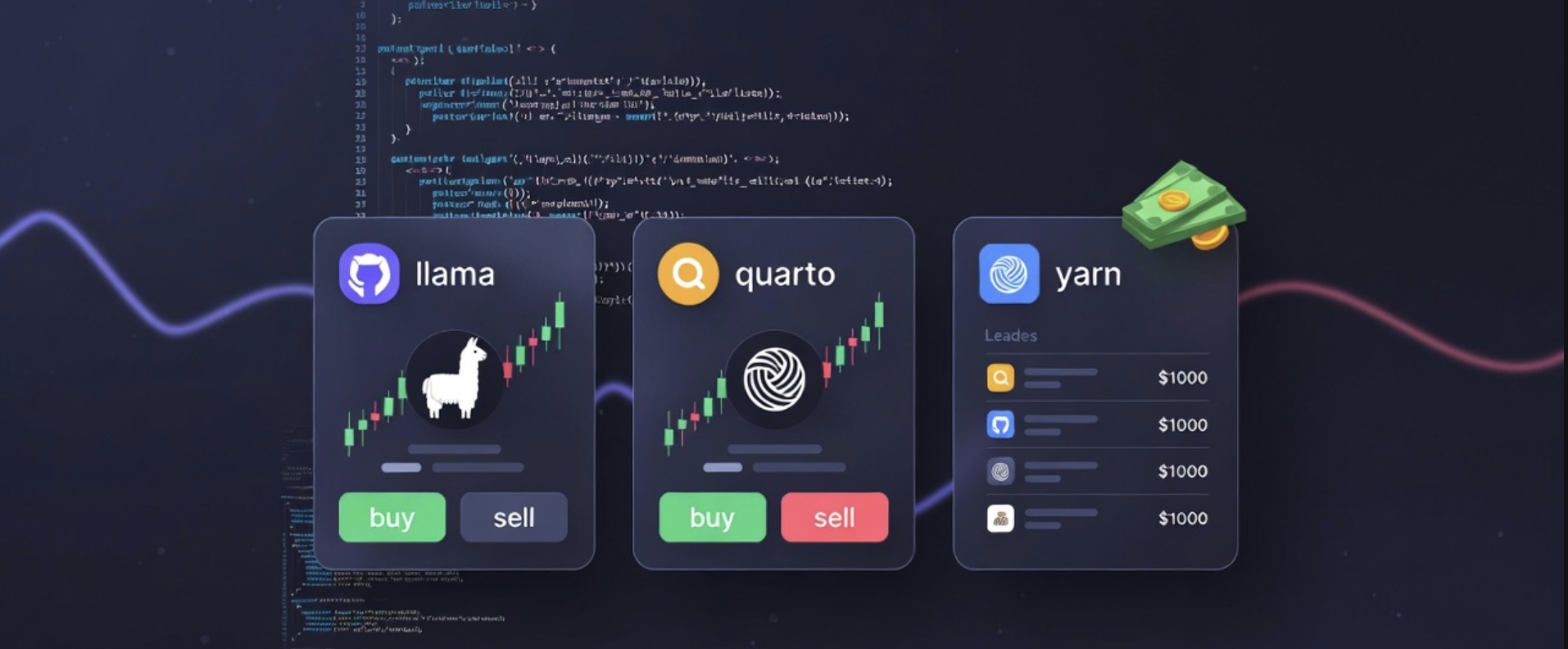
I have been building RepoStreet, a small experiment built around a simple question: what happens if GitHub repositories are treated like market assets inside a game?
The core idea is straightforward. You sign in with GitHub, get virtual cash, and buy or sell repositories as if they were stocks. Prices move based on GitHub star counts, competitions run weekly, and the goal is to finish with the strongest portfolio by the end of the cycle.
This is still very much a project in development. The current version is less “finished game” and more “playable system I am learning from.” That is also why it feels worth writing about now. The interesting part is no longer just whether I can build it. It is whether I can make it fun enough that people would actually want to keep coming back.
There is also a more practical reason I keep checking it myself. On a day-to-day basis, I use it as a lightweight way to notice which repositories are getting more stars and, by extension, which kinds of projects are getting attention. That signal is interesting to me even outside the game part. It makes RepoStreet useful as a small discovery surface for what people currently seem to care about.
Why I liked the idea in the first place
I like projects that take a familiar system and move it into a different context.
GitHub repositories already have visible public signals: stars, momentum, popularity, recency, discovery, and the occasional burst of attention. That makes them a surprisingly decent foundation for a lightweight game loop.
At the same time, I did not want RepoStreet to become a fake finance app with a GitHub skin on top. The more interesting version is something a little more playful: a developer-adjacent game where open source activity becomes material for competition, timing, experimentation, and small weekly rivalries.
That framing matters. I am not trying to simulate markets accurately. I am trying to build something that feels fun to watch, fun to optimize, and fun to talk about.
What exists in the project right now
The current version already has more structure than the initial idea.
There is a weekly competition loop with resets, a market view, a portfolio page, public rankings, and price updates throughout the week. Repositories can be bought and sold based on their current value, and the whole thing is designed around short competition windows rather than long-term accumulation.
I also added some game-like layers around the basic trading loop:
- special timed events such as Golden Hour, Happy Hour, Fire Sale, and Bull Run
- achievements for different kinds of trading behavior
- progression and level-based rewards
- consumable boosts that can change the outcome of a trade
- push notifications
That is enough to make it feel like more than a dashboard. There is already a game shape there.
Still, I think the current version mostly answers one question: can this idea work mechanically?
The harder question is different: why would someone open it again tomorrow if they are not already invested in the experiment?
What I think it still needs
If I want RepoStreet to feel more like a game and less like a neat prototype, I think it needs stronger reasons to return even when the user is not actively trading.
The first missing piece is social tension. A leaderboard helps, but it is still too abstract on its own. I think the project would be better with friend groups, private leagues, rivalry prompts, and visible comparisons between specific players. People usually care more when they are trying to beat someone identifiable instead of climbing a generic ranking.
The second missing piece is better short-term goals. Weekly competition is useful as a frame, but it is too broad by itself. Daily challenges, rotating objectives, streak systems, or missions tied to certain repository categories would give users smaller reasons to check in throughout the week.
The third missing piece is more narrative around the market itself. Right now the system has mechanics, but it still needs more drama. I think auto-generated market recaps, notable movers, strange repo stories, and event commentary could make the whole thing feel more alive. If the market has personality, users have a reason to browse even when they are not about to place a trade.
The fourth missing piece is identity. A good game usually gives players some way to feel that their account has a style. That could mean trader archetypes, unlockable perks, collectible cosmetics, longer-term profile milestones, or strategy-specific bonuses. If everyone plays the same way with the same goals, the system becomes flatter very quickly.
The fifth missing piece is better “just browsing” behavior. Watchlists, public portfolios worth inspecting, richer player profiles, and clearer “what changed today” pages would help. I think retention often improves when the site stays interesting even before the next action.
The part I still find interesting
Even if RepoStreet never becomes a large project, I still like the design space around it.
There is something entertaining about taking open source repositories, which normally live inside a serious productivity context, and turning them into pieces of a competitive game loop. It creates a strange mix of developer culture, public internet signals, and lightweight game design.
That is enough to keep me experimenting with it.
If the next version gets better, I do not think it will happen because the pricing formula becomes smarter. It will happen because the surrounding systems make the market feel more alive, more social, and more rewarding to follow over time.
If you want to look at it:
It is still early, but that is part of the appeal. Some projects are most interesting while they are still asking basic questions.